
Why can Standard Operating Procedures Manuals fail?

When compiling a Standard Operating Procedures Manual, you must keep in mind that people are involved.  You need their cooperation and buy-in in order to achieve a good end result.  They must understand how they will benefit by the whole process.  It is a creative process which involves the cooperation between managers, employees, and advisors.

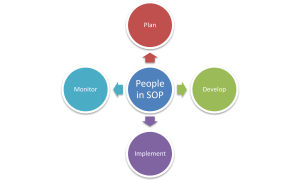
Creating a Standard Operating Procedures Manual is a cyclical process.  It can best be illustrated below.
why standard operating procedures fail

This process includes planning for results, development, implementation, monitoring, and performance feedback.

If you develop a SOP Manual and simply impose it on your employees, your efforts will be futile.  In fact, it is more likely that you will create resentment, rejection of the SOP Manual, and other small acts of sabotage which defeat your purpose.

Everyone who is affected by the SOP Manual should contribute to its development.  If you do not succeed in involving them in the right way, all your efforts are in vain.

Reasons why Standard Operating Procedure Manuals fail to be effective always include the people involved.  Here are examples of the causes for failure

1. Top management is not committed to the process

It is the task of top management, once they decide to create a SOP Manual, to actually follow through and focus the employees’ attention on the goals and benefits of the SOP Manual by communicating with them, and being open to suggestions from all employees throughout the whole process.  If they are not enthusiastic about it, they cannot expect their employees to support it.

 2. Employees mistrust the motives of management

This is a big problem, especially if matters have not been going well between the management and employees prior to the SOP process initiation.  A culture of openness and fairness is far more conducive to producing positive results.

 3. Resistance to change

It can be difficult for some employees to help develop and adapt to new procedures.  They may be very comfortable with the status quo, and not see the need to looking for better ways to do things.

 4. Lack of clear communication

Employees should be informed about the whole aim of creating Standard Operating Procedures before trying to get their input.  They must understand that any input from them is valued, no matter how small it is.  They are, after all, the experts at what they do. They must also feel safe to air problems experienced previously in a procedure, even if it may prove contentious.
What to include in your business Standard Operating Procedures

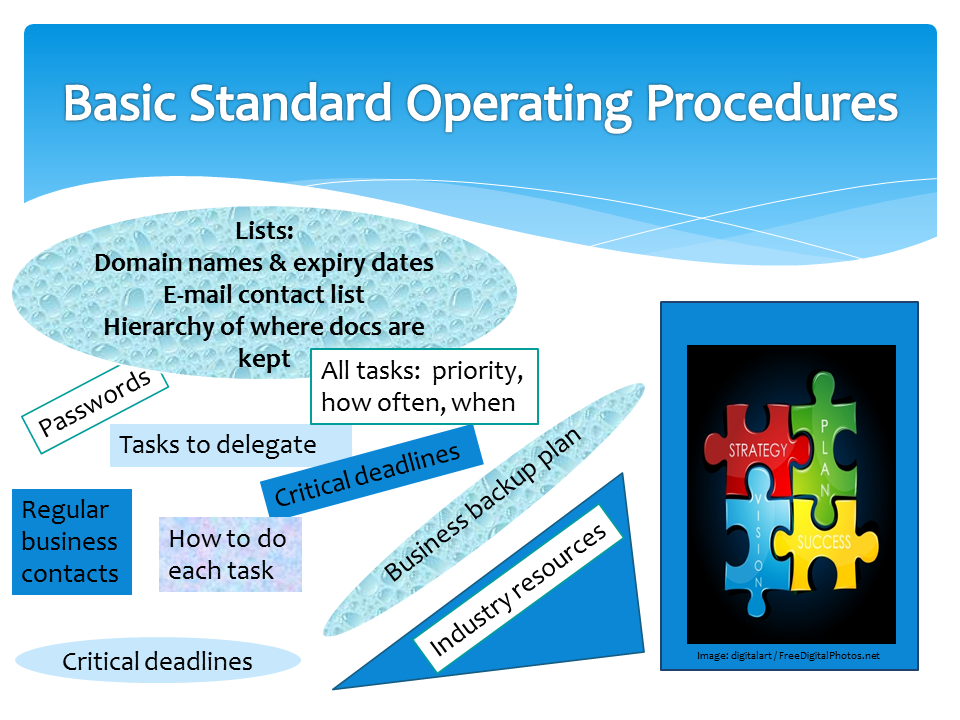
Ever wondered what to include in your small business Standard Operating Procedures?

Below is an infographic detailing the basics.


Once your Standard Operating Procedures are compiled, your business will be more productive, because you will not be re-inventing the wheel with each task.

Do you need help in writing your Standard Operating Procedures?  Please contact Virtual Productivity Solutions.  We can consolidate what you have, suggest ways to do routine tasks, and help you create a solid basis for your business.

Boost your business by creating effective systems


Any business owner will be able to tell you that a business built on effective systems is far more successful than one that is not.

The Business Directory defines a business system as a methodical procedure or process that is used as a delivery mechanism for providing specific goods or services to customers.

Creating effective business systems can be challenging for small business owners.  You may not have the time or inclination to develop systems.  However, if you are serious about business growth, you could consider outsourcing this function to someone that is knowledgeable in this area.  Alternatively, if you have enough in-house staff, you can delegate it to someone that is detail oriented, analytical, persistent and creative, and who does not have a full-time work load.

What would outsourcing your systems management entail?

  • Your key performance indicators will be identified
  • Areas of reduced productivity will be identified
  • Opportunities for improvement will be suggested
  • Your process documentation will be created (checklists, flowcharts, etc) to support the opportunities for improvement
  • You as business owner will approve all processes before they are released
  • Your staff will have an opportunity to contribute to these systems, and also be trained on how to use these systems once they are approved
  • Data will be collected data to monitor your key performance indicators
  • You will receive a reporting scorecard each month on how your business measures up to these key performance indicators.

How to keep on top of your systems development and implementation once you outsource it

  • There needs to be open communication and trust between you and the person working on your system
  • While a lot of the development and detail of creating systems is outsourced, as the business owner you are still responsible and accountable for what happens with regard to systems and processes.
  • A weekly status meeting will go a long way in helping you to catch up with what has been achieved, what has gone well, or areas where challenges or issues have developed.

The results of outsourcing systems development and implementation

  • You will have more time
  • You will increase your competitiveness
  • You will reap the financial rewards of the working systems and procedures
  • Your staff will be happier because they know what they are supposed to be doing
  • Your customers will be more satisfied at your consistent service and output
  • Your business continuity is ensured, because anyone can do the urgent tasks according to the set out procedures if a key staff member is ill or on leave.
  • You will be able to take your business to the next level because your systems and procedures are working.

Next steps

If you would like to find out more about how to improve your business systems, or if you are interested in outsourcing this function, please contact Virtual Productivity Solutions.  We will gladly assist you in this regard.

Just your basic SOP!

This post originally appeared as a guest post on Small Business Fundamentals.

What are Standard Operating Procedures (SOPs)?

One of the most useful systems to streamline your business is having a Standard Operating Procedures manual.  It is a working document (accessible to all staff) that provides detailed instructions on specific recurring work processes.  It communicates who will perform the task, what materials are necessary, where the tasks will take place, when the task must be performed, and how the person will execute the task.

This forms the backbone of an organization.

Standard Operating Procedures should be designed to achieve specific results.  Management must decide what business goals will be achieved through better management with SOPs and how those goals will be measured.

The purpose of SOPs is to assist employees in the daily operations of the workplace and to ensure that critical company policies are followed.  It provides written documentation of best practices.  It also provides the foundation for

  • Job descriptions
  • Employee training
  • Corrective action and discipline
  • Performance reviews

Why does a small business need Standard Operating Procedures?

  • It provides the basis for communication.  Employees work better when they are well-informed, able to perform their jobs autonomously, and are able to feel effective in completing tasks.  Management can feel confident that daily operations are running smoothly.
  • It provides clarity.  It decreases errors and mistakes, conflict, and enhances the feeling of fairness and equity in the workplace.
  • Because of its clarity, it reduces training time, provides direction, and improves work uniformity.
  • It protects employers in areas of potential liability and personnel matters.  A SOP ensures that all employees have access to those policies.
  • It maximises smooth operations.  The ideal is that the SOP will ensure that employees know the policies, rules, regulations, and standardized methods for accomplishing specific tasks and goals.  It also makes it possible for the work to go on when key personnel are not available.
  • It promotes consistency and reliability within the workplace to maintain quality control and assurance.

A few points to consider when compiling Standard Operating Procedures

  • In order to ensure that the Standard Operating Procedures address the goals of the organization, a needs assessment should be conducted to find out which policies and procedures should be included.
  • Standard Operating Procedures should be written as clearly and simply as possible.
  • Various formats can be used to enhance clarity.  For instance, you can use simple steps, hierarchy steps, graphic images, or flow charts.
  • The level of detail in SOPs should provide adequate information to keep performance consistent while keeping the procedures from becoming impractical.
  • Drafts should be made and tested before a SOP is released for implementation.
  • Make the document rigid enough to document the rules of the organization, but flexible enough to be able to be followed easily.
  • Get the input of the staff that actually do the job.  People are much more likely to accept and use a SOP if they feel a sense of ownership in it.

Revision of Standard Operating Procedures

Once the SOP has been approved, a schedule should be set for reviewing it.  Every SOP should be reviewed annually, or, at a minimum, bi-annually to make sure that the practices and policies are still relevant and have not changed.

Does your business have Standard Operating Procedures in place?  Do you need to revise your documentation to make is more up-to-date and relevant?  Contact Virtual Productivity Solutions to get your business processes mapped out.

5 Key Benefits of a Standard Operating Procedures Manual

One of the most useful systems to streamline your business is having a Standard Operating Procedures (SOP) manual.  This manual lists the all the tasks that are essential for your business success, how to do these tasks, and who is responsible for the tasks listed.

This sounds useful, but are there specific measurable outcomes if you have a SOP manual in place?  The answer is a very definite YES.

Your productivity improves, and as a small business owner, you need to be highly productive to succeed.  Five benefits are listed below.

Reduced learning curve/training time for new employees

When someone is new on the job, your well-written and researched SOP can be a lifeline to them to be able to know how things work.  For instance, you can ask your new employee to make all the arrangements for you to organize and attend a workshop in another city.  By referring to the SOP, your new employee will know exactly which travel agency you use with their contact details, which type of car to hire/service to use, how many quotes to get regarding the venue, how to communicate with the workshop delegates, etc. without having to ask you about it all.  It’s a great time-saver and confidence booster for the new employee.

Ensured business continuity

When a key staff member is on leave or not in the office for some reason, work does not have to stand still.  By referring to the SOP someone else can take over the urgent tasks and do them correctly the first time.

Standardized processes

The SOP makes it easy to find out what policies and procedures are in place to handle repetitive situations/tasks.

Delegating tasks becomes a no-brainer

A good SOP will include the organogram of the business, as well as have a short job description and contact details for each staff member. If you need to delegate a certain task, you can see at a glance who will be able to help you or advise you.  You can stop micromanaging, as it is clear who is responsible for what.

Ensure that your clients are getting the best possible experience with you

Because there is a standard way of dealing with client queries, refunds, promotions, follow-up etc., you can make sure that each client is treated fairly and equally, enhancing their interactions with you.  You thus provide the best possible client service.

A SOP is a living document, which is subject to change.  (It is good to review it quarterly). It is therefore useful to have it in electronic format on a web-based collaborative system so that all employees have access to the latest version.

Do you need to put together a clear and straightforward SOP, compiled in simple language to convey practical information?  Please don’t hesitate to contact Virtual Productivity Solutions to help you put it together.  Your business will thank you for it.